Memory is leaving the model
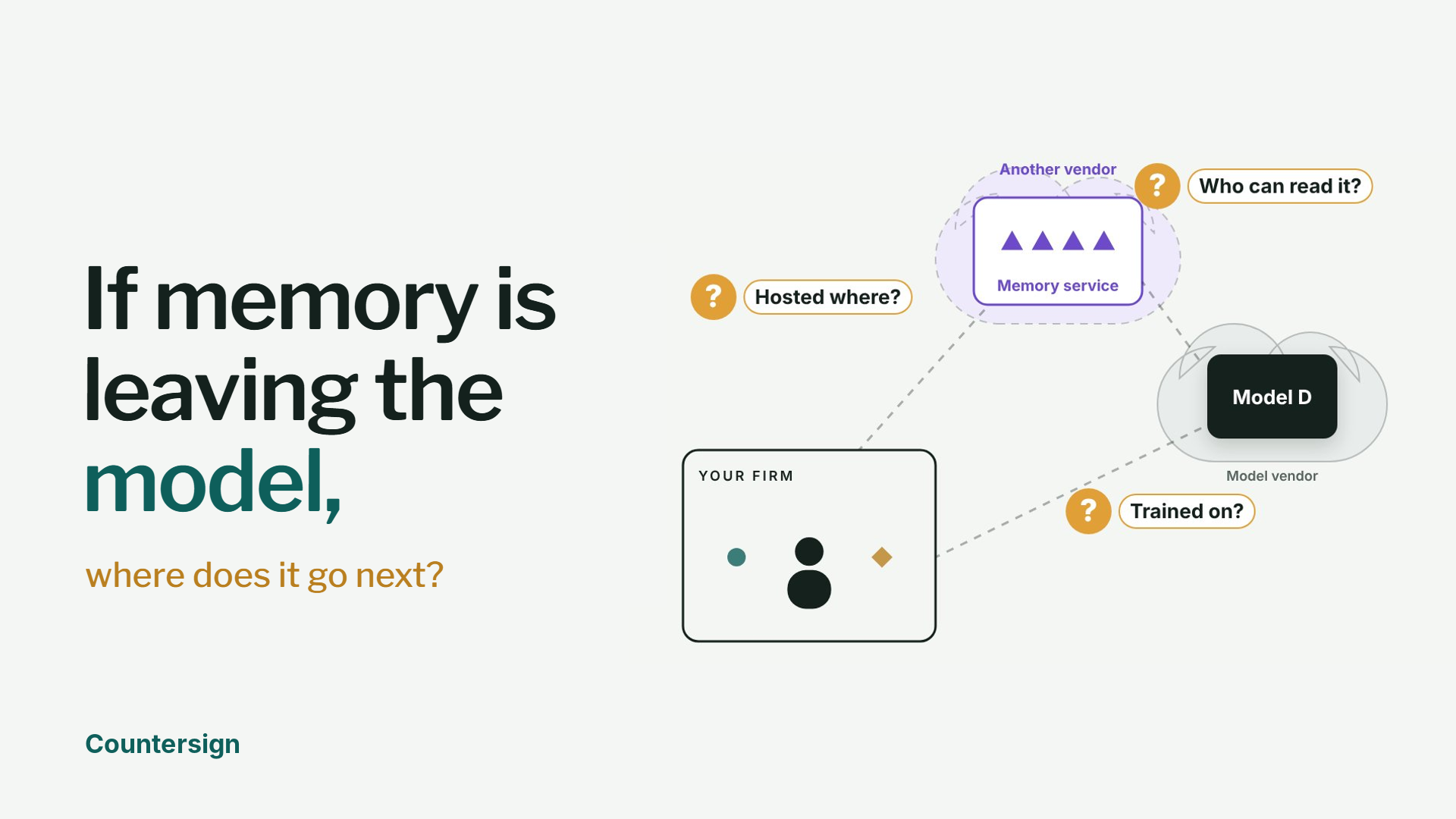
Memory is leaving the model. In "Where does the learning live?" I argued that what agents learn from staff should sit outside the model's weights, in a system the Enterprise owns. Businesses are now being built to meet that need.
Living Brain (livingbrain.com) is a memory layer that sits outside ChatGPT, Claude, Cursor and Codex. Write it once, pull it back into any of them. Change the model, keep the work. It's a neat idea, well named, and I think it's right about the direction. The capability is needed: nobody wants to explain their project from scratch every time they switch tools.
There's an efficiency gain too. Instead of re-sending the whole history to the model every time, a memory layer sends only what the task needs. That means fewer tokens per task; Living Brain reports large savings in its own tests. With model bills now firmly on the CFO's radar, that alone may do more to get memory out of the model than any argument about ownership.
But if memory leaves the model, where does it go? If the answer is another vendor, the dependency has moved, not gone. For an Enterprise I think it raises three questions.
More moving parts. The Enterprise would depend on a model vendor, perhaps an agent platform, and now a memory vendor. Each needs its own risk assessment and resilience plan, and each can reprice or be acquired. If the memory service is down, the agents forget the client. In the UK that may engage the operational resilience rules; in the EU it is DORA territory again: concentration risk and an exit plan for every critical provider.
Whose is it? The memory is the firm's judgement: every correction, caveat and refusal its people have made, on its clients' work. That is intellectual property, and it is full of client facts. So I question where it is hosted, who at the vendor can read it, and whether it can be used to train anything. Some vendors' terms allow authorised staff, contractors and partners to access customer data for support, and allow customer data, excluding personal information, to be used to train and tune models. Enterprise accounts can negotiate their own terms, and for personal use the defaults may be entirely reasonable. I question whether they are the right default for an Enterprise with client data. And on exit, can the Enterprise take its memory, complete, in a form another system can use?
Control. Memory without permissions is only half the job. What an agent may recall about which client, who can see it, and what gets written down are decisions the firm makes by risk. Those controls are hard to enforce in a store the firm doesn't run.
So yes, lift the memory out of the model. Just don't hand it to someone else. For a fund administrator the memory belongs inside the Enterprise: in its own estate, under its own permissions, on its own record, whichever model it uses next.
That is how Countersign is designed. The agents, the record and the learning run in the Enterprise's own cloud. The models are suppliers, tested on the firm's own work and swapped when the firm decides. The agents draw only what each task needs from the firm's own record, and the routine work goes to small, low-cost models, so the efficiency gains compound. The memory stays where the accountability is.
Registration is open: Countersign webinar and demonstration, Tuesday 24 November, 2pm UK, 30 minutes. Register at countersigngroup.com.
← All news & insights